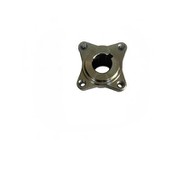
Basic Characteristics Of Rehabilitation Medical Equipment Components
Mar 03, 2026
As crucial components ensuring patient functional recovery and treatment safety, rehabilitation medical equipment components must meet extremely stringent design and manufacturing requirements. These components not only need high precision and high reliability but must also comply with biocompatibility, durability, and safety standards in a medical environment.
1. High Precision and Stringent Geometric Tolerance Requirements
The machining precision of medical equipment components generally reaches the micrometer level (μm). For example, the dimensional tolerance of artificial joint prostheses must be controlled within ±0.01mm, while the coaxiality error of surgical robot joints must not exceed 0.01mm to ensure precise multi-axis motion coordination. CNC machining achieves full-process control of dimensional accuracy, geometric tolerances, and surface roughness through five-axis linkage, thermal compensation, and other technologies.
2. Material Safety and Biocompatibility
Components that come into direct contact with the human body or are implanted within the body must use medical-grade materials and pass biocompatibility tests, including cytotoxicity, skin irritation, and delayed-type hypersensitivity reactions. Commonly used materials include:
- Metallic materials: such as stainless steel (high corrosion resistance) and titanium alloys (good biocompatibility), used in the manufacture of implants and structural components;
- Polymer materials: such as polyethylene and polypropylene for plastic parts; silicone rubber for catheters and artificial organ components;
- Ceramic materials: such as alumina ceramics for artificial joints, possessing high hardness and wear resistance;
- Composite materials: such as carbon fiber, high strength and lightweight, suitable for support structures.
3. Durability and Fatigue Resistance
Rehabilitation equipment needs to withstand repeated loads during long-term use, and components should possess good fatigue resistance. For example, gait training equipment needs to undergo fatigue testing to verify its structural stability during long-term operation. Simultaneously, materials must possess sufficient strength and corrosion resistance to withstand disinfectant erosion and daily wear.