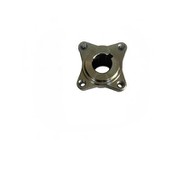
Basic Characteristics of Oil and Gas Industry Components
Feb 03, 2026
Oil and gas industry components typically operate in harsh environments characterized by high temperature, high pressure, and strong corrosion. Their basic characteristics are mainly reflected in the following aspects:
High Corrosion Resistance
Because oil and gas media often contain corrosive components such as hydrogen sulfide, carbon dioxide, and chloride ions, components are mostly made of corrosion-resistant alloy materials, such as nickel-based alloys, cobalt-based alloys, or stainless steel (e.g., 904L, 6Mo alloys). Some surfaces are further enhanced with thermal spraying, nickel-phosphorus composite plating, and other processes to improve corrosion resistance.
High Strength and High Hardness
To withstand the high pressure and mechanical impact of deep wells, components must possess extremely high mechanical strength. For example, Pfinodal® components, after heat treatment, can achieve a tensile strength of 155 ksi (1068 MPa) and a Vickers hardness of over 380, making them suitable for critical components such as drill bit bearings. Hard alloy parts (such as tungsten carbide) are also widely used due to their high hardness and wear resistance.
Excellent Wear Resistance
In sandy, high-friction environments, components need to operate stably for extended periods. Using fine or ultrafine tungsten carbide materials significantly improves wear resistance, adapting to high-pressure, high-temperature operating environments. Furthermore, graphite-based composite materials, due to their self-lubricating properties, are also used in bearings, seals, and other components to reduce frictional loss.
Precision Manufacturing and Standardization
Oil and gas components are manufactured according to stringent standards (such as API 11Ax) to ensure interchangeability and reliability. Machining accuracy can reach ±1-2mm, and customized production is supported to meet specific operating conditions.
Multifunctional Integrated Design
Some components have multiple functions. For example, the oil-gas separator not only achieves gas-liquid separation but also provides buffering, pressure regulation, and impurity filtration; while the oil-gas lubrication system integrates lubrication, cooling, and sealing, improving equipment operational stability.
Adaptable to Complex Operating Conditions
Component design emphasizes environmental adaptability. For example, in harsh workshop environments such as dust and water accumulation, a reasonable layout can ensure the stable operation of the oil-air lubrication system, reduce oil buildup, and improve the on-site environment.